
In today's fast-paced world, we are witnessing a rapid evolution that makes artificial intelligence (AI) more than just an idea. It is now considered one of the most radical technologies of our era, completely changing areas as diverse as industry and our daily lives. However, this technological advance is accompanied by major environmental challenges, especially when it comes to energy consumption.
In the United States, under the impetus of new President Donald Trump, massive investments - to the tune of 500 billion - have been conceded to the construction of new data centers to keep pace with the rapid evolution of AI. While the European Union is considering banning the use of certain artificial intelligence tools it considers potentially dangerous by August 2, 2025, the exponential energy consumption generated by these technologies remains a concern. The question of energy is becoming central.
China is not to be outdone in this race for innovation. Its companies, such as Deepseek, are concentrating their innovations in several technological sectors, such as renewable energies, artificial intelligence (AI), quantitative computing, electric vehicles (BYD) and battery technologies - all important fields that China is set to dominate in the near future. However, these advances and innovations, particularly in artificial intelligence, are not without consequences for our planet. At Carnegie Mellon University, it has been demonstrated that the amount of energy required to produce an image from a generative artificial intelligence system such as Dall-E or Mid Journey is comparable to that needed to fully recharge a cell phone, i.e. between 0.015 and 1.35 kWh. According to the same research, the most energy-intensive authoring tools can increase consumption to as much as 11.49 kWh. However, the actual energy consumption of each online action depends on the servers that process the data. Every gesture, even the most trivial, leaves an energy footprint, as servers play a central role in this dynamic. https://www.bfmtv.com/tech/intelligence-artificielle/creer-une-image-par-ia-peut-consommer-autant-d-energie-que-recharger-un-smartphone_AV-202312040549.htmlhttps://www.geneve.ch/themes/culture/bibliotheques/interroge/reponses/est-impact-energetique-une-recherche-internet
The Energy Race: Exploding Demand
Artificial intelligence is already driving technology giants to look for alternatives to meet their energy needs. For example, Microsoft has announced the activation of a nuclear power plant to meet the demand of its data centers. A paradox when it comes to energy transition, but a choice that clearly demonstrates the pressure exerted on traditional energy sources. Fossil fuels, in particular, will not be sufficient to fuel this growth. This is where the question becomes more pertinent.
How can artificial intelligence evolve without depleting the planet's energy resources?
The major AI companies are faced with a dilemma: advancing their development while respecting global climate objectives. And that's not all. These veritable AI factories - the data centers - consume a considerable amount of energy. A look at the statistical data shows that the situation is alarming. According to data from the International Energy Agency (IEA), this share could increase significantly in the future, with forecasts of between 160 and 590 TWh by 2026 compared with 2022. At the same time, according to forecasts by Gartner, the annual consumption of AI servers could reach 500 TWh by 2027, representing a 2.6-fold increase compared with 2023. This situation could force 40% of these data centers to limit their activities due to a lack of electrical capacitye.https://www.polytechnique-insights.com/tribunes/energie/ia-generative-la-consommation-energetique-explose/.https://www.lemondeinformatique.fr/actualites/lire-face-a-la-croissance-des-datacenters-ia-gartner-predit-des-penuries-d-electricite-95225.html
What new techniques are available to reduce this consumption?
Solutions exist to meet this progressive energy demand. The challenge is to supply these infrastructures with sustainable energy, and here are a few ways of optimizing them:
1. More efficient components: The optimization of graphics cards, with their ability to perform a large number of calculations simultaneously, makes them particularly well suited to the computationally-demanding tasks at the heart of AI, and other AI-dedicated equipment helps reduce energy consumption per operation.
2. Improving AI models: one effective way of limiting the amount of energy consumed by AI is to optimize algorithms by adopting techniques such as model distillation, which generally consists of reducing the size of a model while maintaining its performance, while pruning, which removes unnecessary parts of a neural network, opens up new perspectives which can then reduce energy consumption by a considerable 30 to 40% for certain models.
3. Data center cooling: Innovations in cooling technologies, such as water-cooling or the immersion of servers in conductive fluids, contribute to a significant reduction in energy consumption in data centers. These options can reduce air-conditioning demand by 20-30%. For its facilities in Natick, Microsoft prefers not to use water for cooling or other purposes, favoring instead the use of locally-generated renewable energy. This method fosters the fusion of energy efficiency and sustainability.
However, these solutions will not be sufficient on their own. It is essential to go beyond them. It is therefore necessary to integrate renewable energies into the supply of artificial intelligence infrastructures.
Impact in Africa and Emerging Markets
The challenges are all the more pressing on the African continent, where access to stable, sustainable energy remains a daily struggle. By consuming huge quantities of energy, AI behemoths run the risk of siphoning off essential resources to developing markets. For example, the DRC, with its precarious energy infrastructure, could fall behind in this energy competition.
Because of its expertise, GoShop offers solutions tailored to the specific needs of businesses. We develop powerful infrastructures specifically for technology companies and local data centers such as Orange, Vodacom and Airtel. Our energy solutions help refine energy usage while reducing carbon footprints. This reflects our efficiency and dedication to a sustainable energy future.
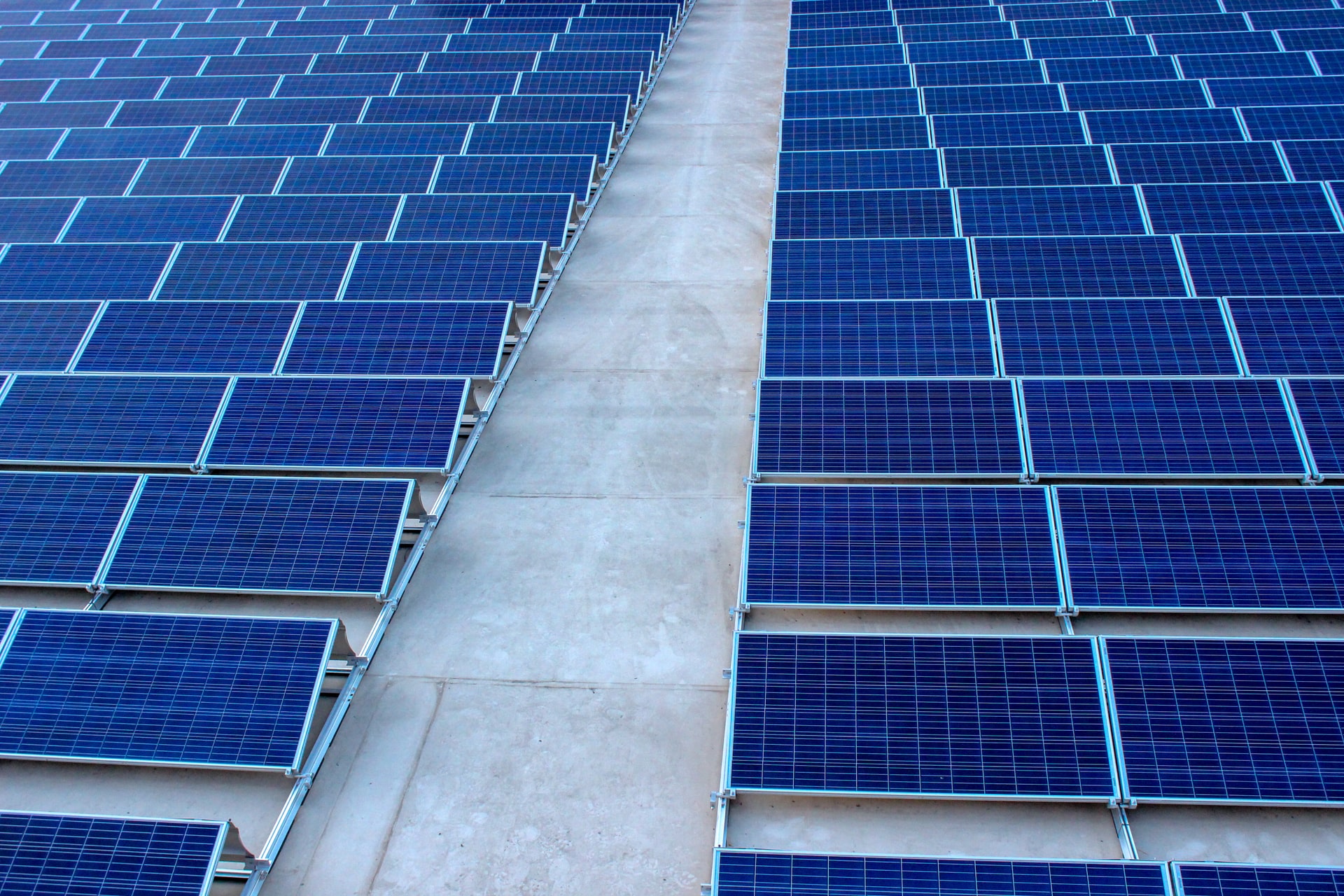
Since its creation, GoShop has been an active participant in this energy transition. The company stands out for its ability to offer local solutions to the growing energy demands of technology companies. We combine solar power with lithium storage systems to ensure a constant, uninterrupted supply of energy.
By incorporating stand-alone systems that use renewable energies such as solar and hydroelectric power, we guarantee efficient management of consumption peaks thanks to lithium batteries. What's more, the integration of intelligent inverter systems optimizes energy management and ensures optimum performance while reducing peak losses. GoShop contributes to reducing the global carbon footprint.
Some say that artificial intelligence is a revolution, but it requires an energy revolution in return. As AI advances, the strain on the world's energy infrastructure intensifies. Nevertheless, this energy transition also represents an opportunity for companies like GoShop to provide sustainable and resilient solutions, helping businesses harness technological advances while reducing their environmental impact.